Adi Ranganathan

Adi Ranganathan // Producer & Audio Engineer

Bridging Creative Intent
with Technical Architecture.

I’m a producer first, and an audio engineer second.
This is the story of how I took Cryo Mix from a flatlined MVP to a scaling AI platform by prioritizing the artist's workflow over raw technical capability.

The Role Product Lead
The Problem High Churn / Low Trust
The Outcome 110k+ Users / $150k ARR
01. The Pivot

Problem: V1 was a Tool,
not quite a Workspace.

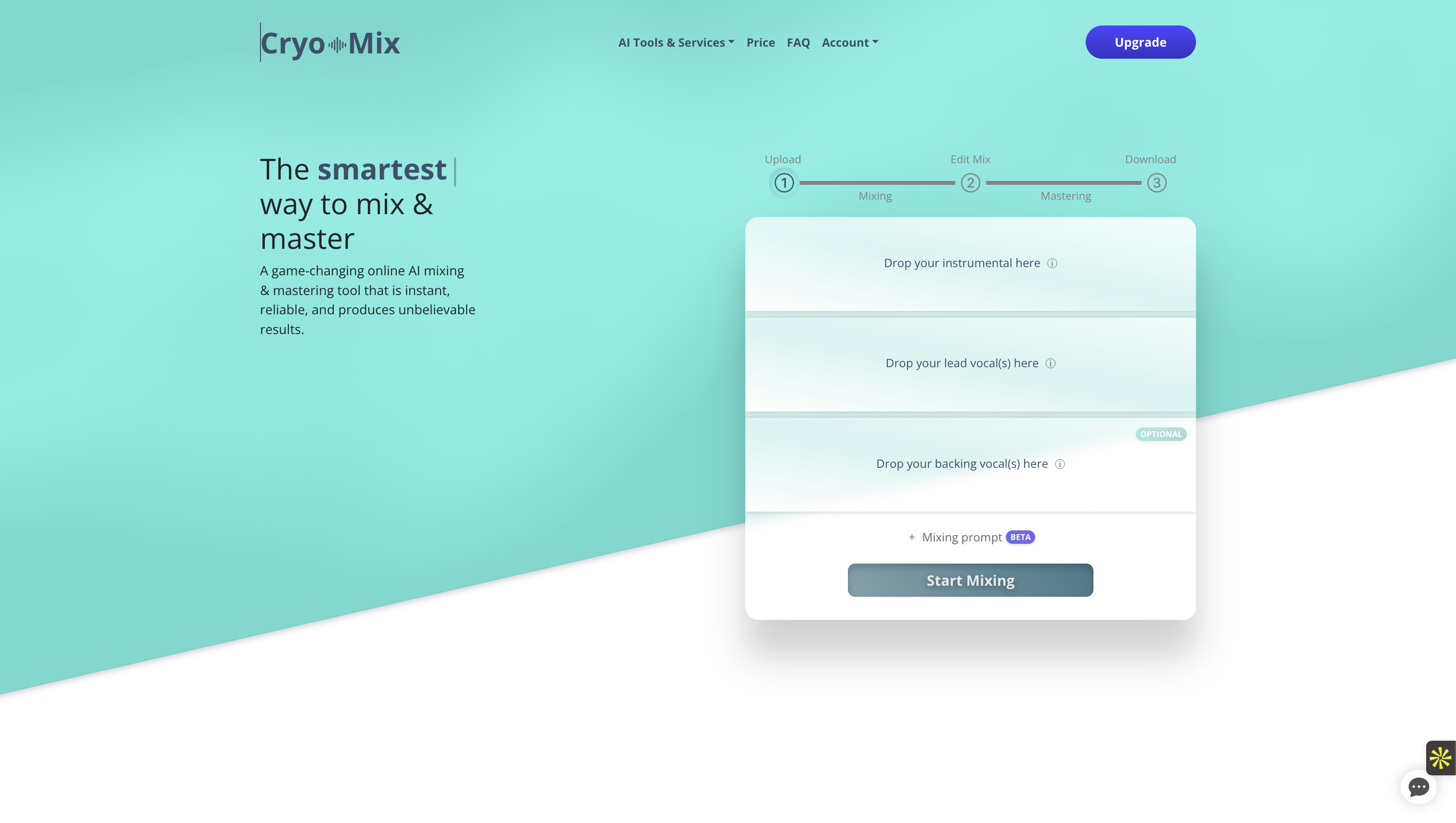
In v1, Cryo Mix was a "black box." You uploaded a file, waited 5 minutes, and got a result. While the backend DSP (Digital Signal Processing) was impressive, the user experience was alienating.

Producers want control. I hypothesized that by exposing the controls and visualizing the data, we could build trust with professional users.

"If I can't see the waveform, I don't trust the change. We needed to move from a utility to a creative environment."
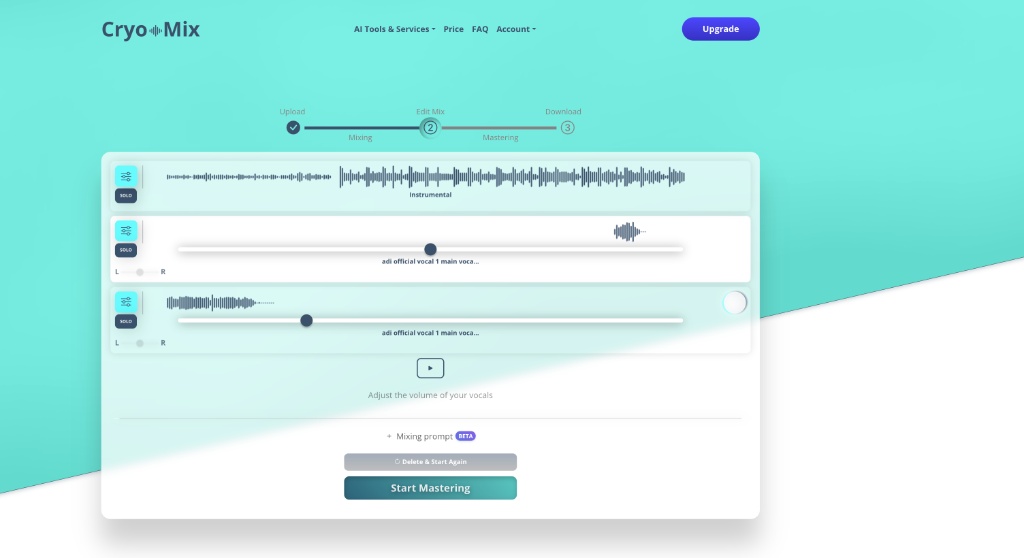
The V1 Failure
V1 Legacy Interface

The original linear "fire and forget" uploader that led to high churn.

The Interface Overhaul

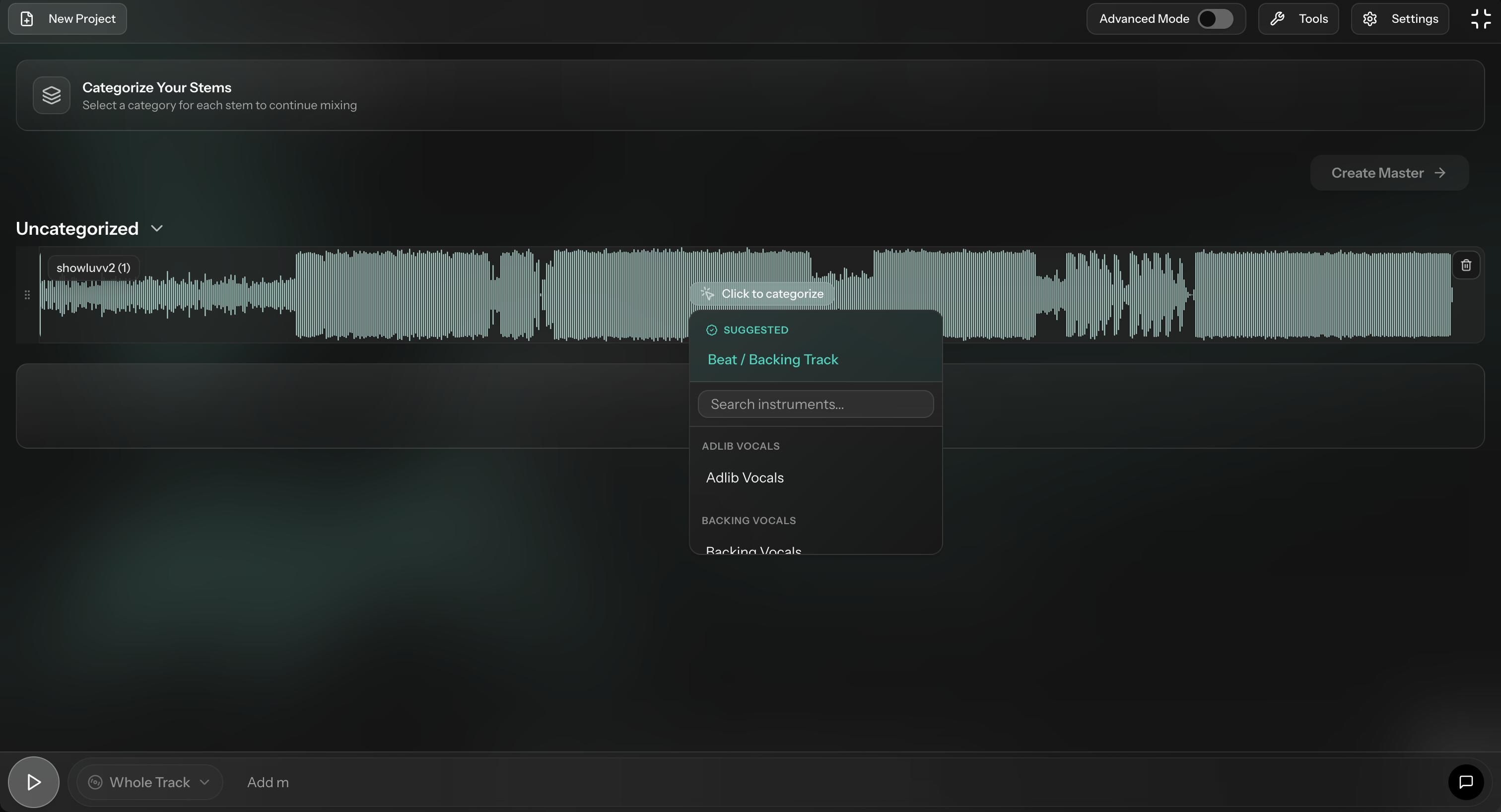
I led the design of the V2 "Workspace." By shifting to a non-linear timeline, we allowed users to iterate on their sound, effectively closing the gap between AI automation and manual DAW control.

V1: Rigid Workflow
V1 3-Step Uploader
V2: Flexible Workspace
V2 Timeline Editor

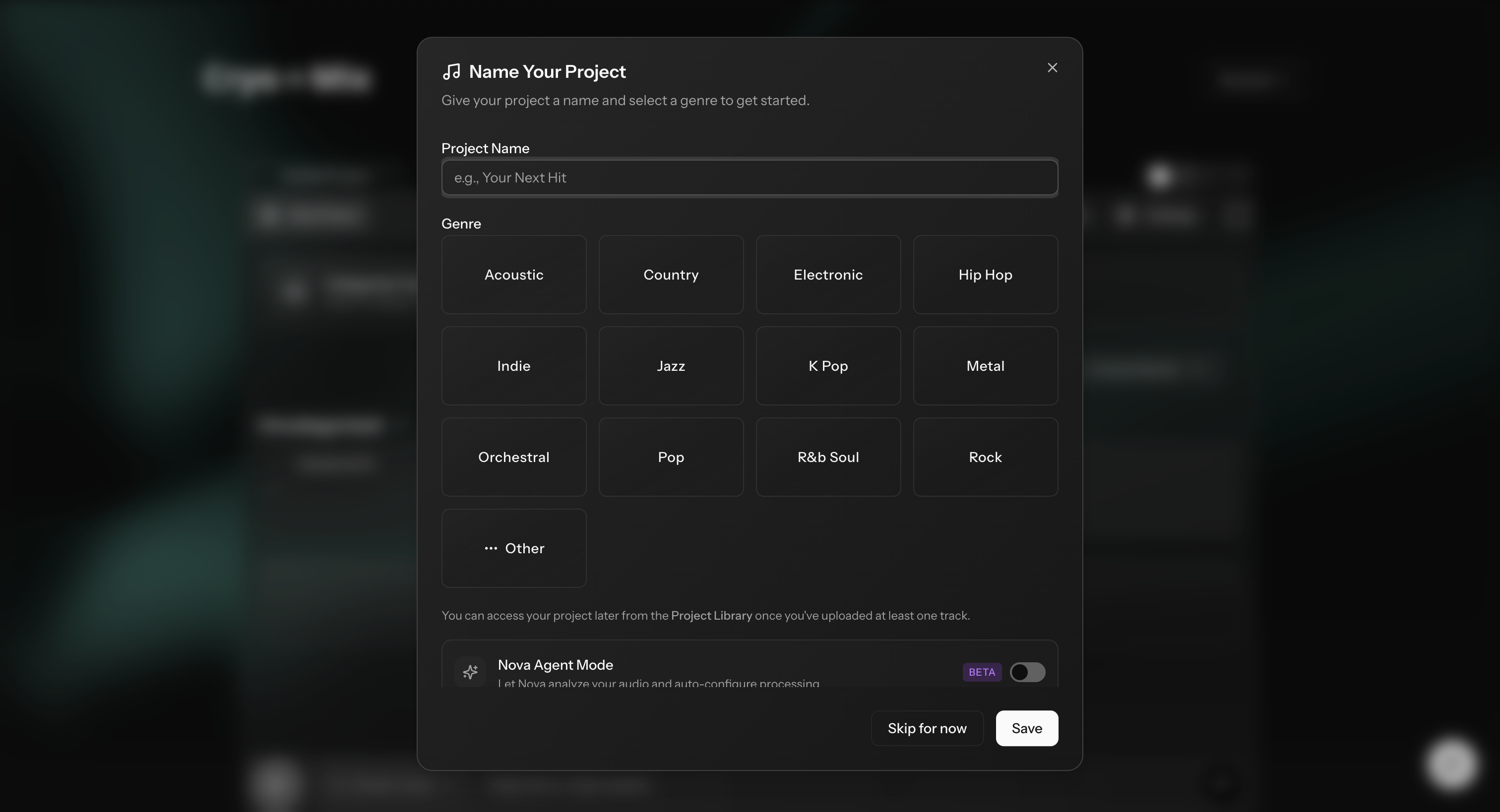
Refining the Input Data

Genre isn't a label. It dictates the mixing algorithm. I designed a new modal to capture this metadata upfront.

By forcing this categorization early, we drastically improved the relevance of the initial AI processing, reducing the "edit time" for users by 40%.

Genre Selection Modal

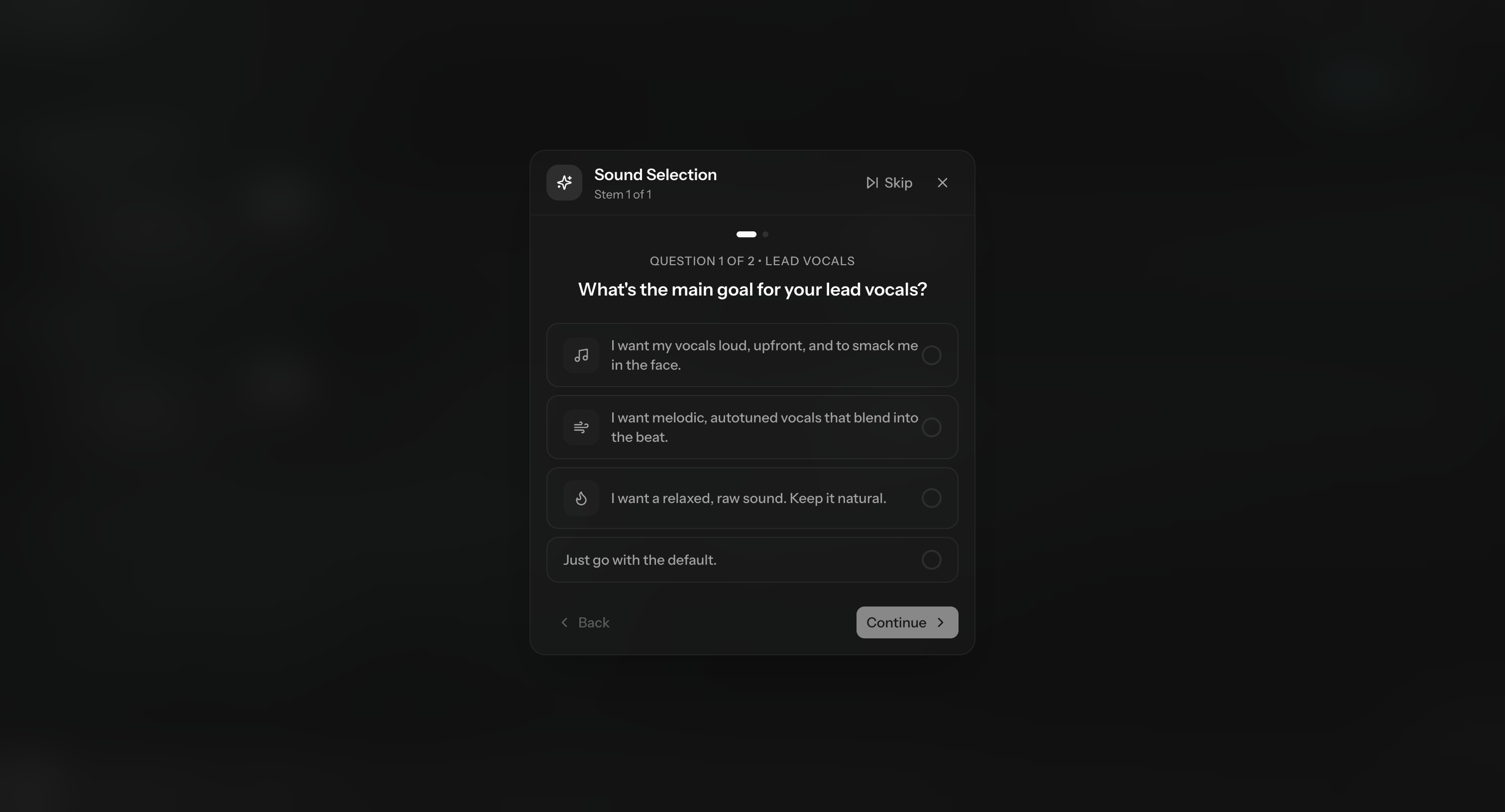
Translating Subjectivity

A major friction point was vocabulary. A user says "make it warm," but the engine understands "low-mid boost." I designed semantic questionnaires to map these abstract creative goals to concrete DSP parameters. Users of all skill levels have a tool that understands them.

Sound Selection Questionnaire
02. Engineering & ML

Beyond Wrappers:
Building a Custom Audio RAG.

Most "AI" audio tools are just ChatGPT wrappers. We built something different. I architected a specialized RAG (Retrieval-Augmented Generation) system using CLAP embeddings to bridge the gap between subjective language ("Make it punchy") and objective DSP execution.

The "Nova" System Prompt

Managing state in an infinite chat context is difficult. I engineered a strict protocol where Nova recognizes [APPLIED] markers to "garbage collect" previous context, ensuring the AI focuses only on the current mixing task without getting confused by old requests.

system_prompt_v4.txt
You are Nova, an expert AI Mastering Assistant.

CRITICAL - HISTORY HANDLING:
- Messages marked [APPLIED] are FINISHED. Completely ignore them.
- If user says 'louder' after [APPLIED], respond ONLY about loudness.
- NEVER ask about or mention topics from before the most recent [APPLIED] marker.

PARAMETER CONTROL:
You control six mastering parameters:
- Width: Stereo width
- EQ Match: EQ correction
- Loudness: Compression/volume

Orchestrating the DSP Chain

The LLM doesn't touch the audio directly. It outputs a JSON intent which my backend maps to a chain of 14+ discrete audio effects (Denoisers, EQ, Compressors).

DSP_Chain_Config.php
// 'Main Event' Preset Chain Definition
'main event' => [
  'chain' => [
    ['effect' => 'denoiser', 'level' => 'M'],
    ['effect' => 'eq_match', 'level' => 'H'],
    ['effect' => 'vocal_level_compressor', 'level' => 'M'],
    ['effect' => 'saturation', 'level' => 'H'],
    ['effect' => 'short_reverb', 'level' => 'M'],
    ['effect' => 'delay', 'metadata_bindings' => ['bpm' => 'bpm']],
  ],
],

The "Secret Sauce": CLAP Embeddings

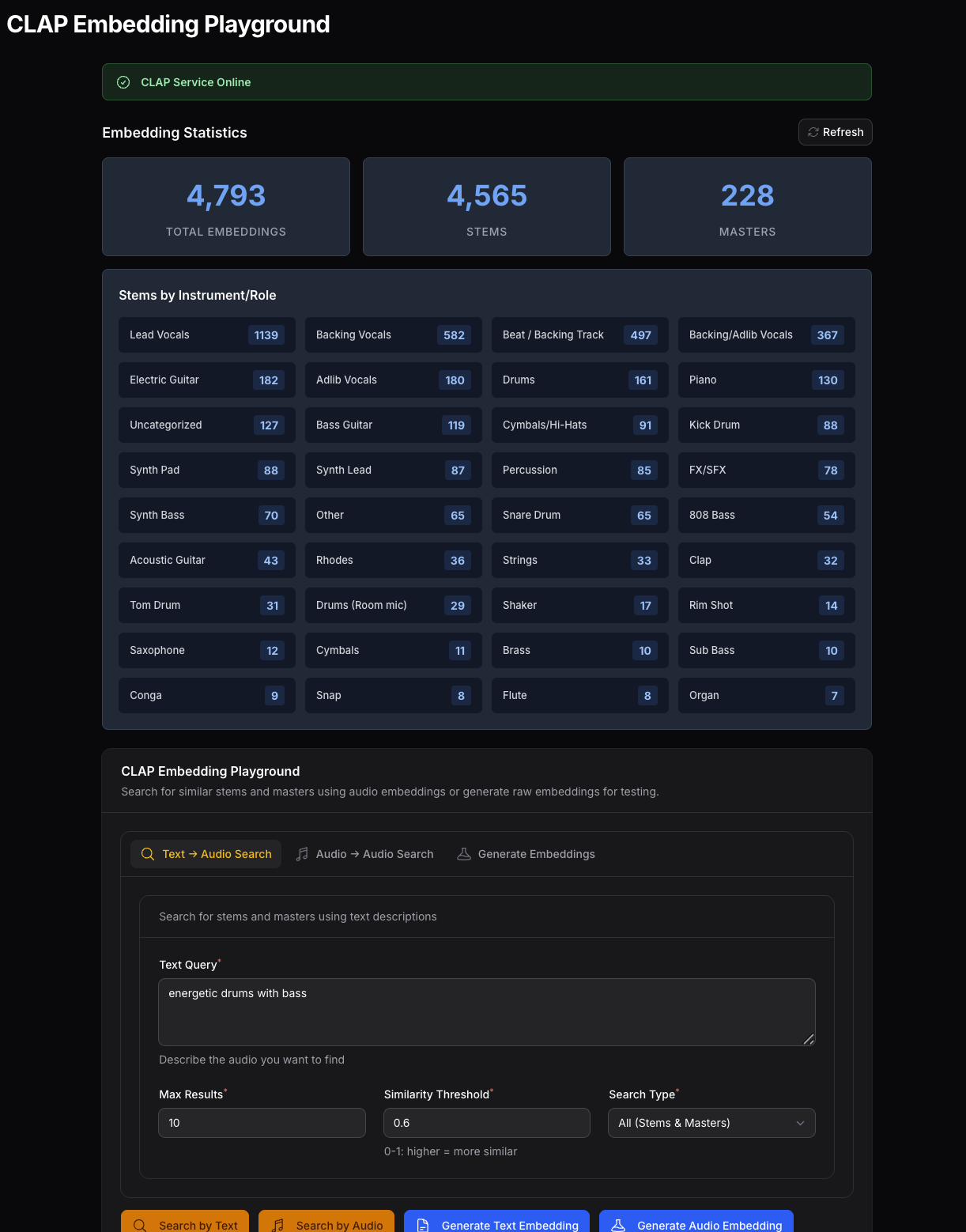
Standard text embeddings fail at audio. I implemented CLAP (Contrastive Language-Audio Pretraining) to create a shared vector space where "Warm Guitar" (text) and an actual .wav file of a warm guitar (audio) are mathematically close.

Embedding Playground
CLAP Embedding Statistics

Data-Driven Tuning: Tracking 4,793 total embeddings to identify cluster gaps in our mixing knowledge base.

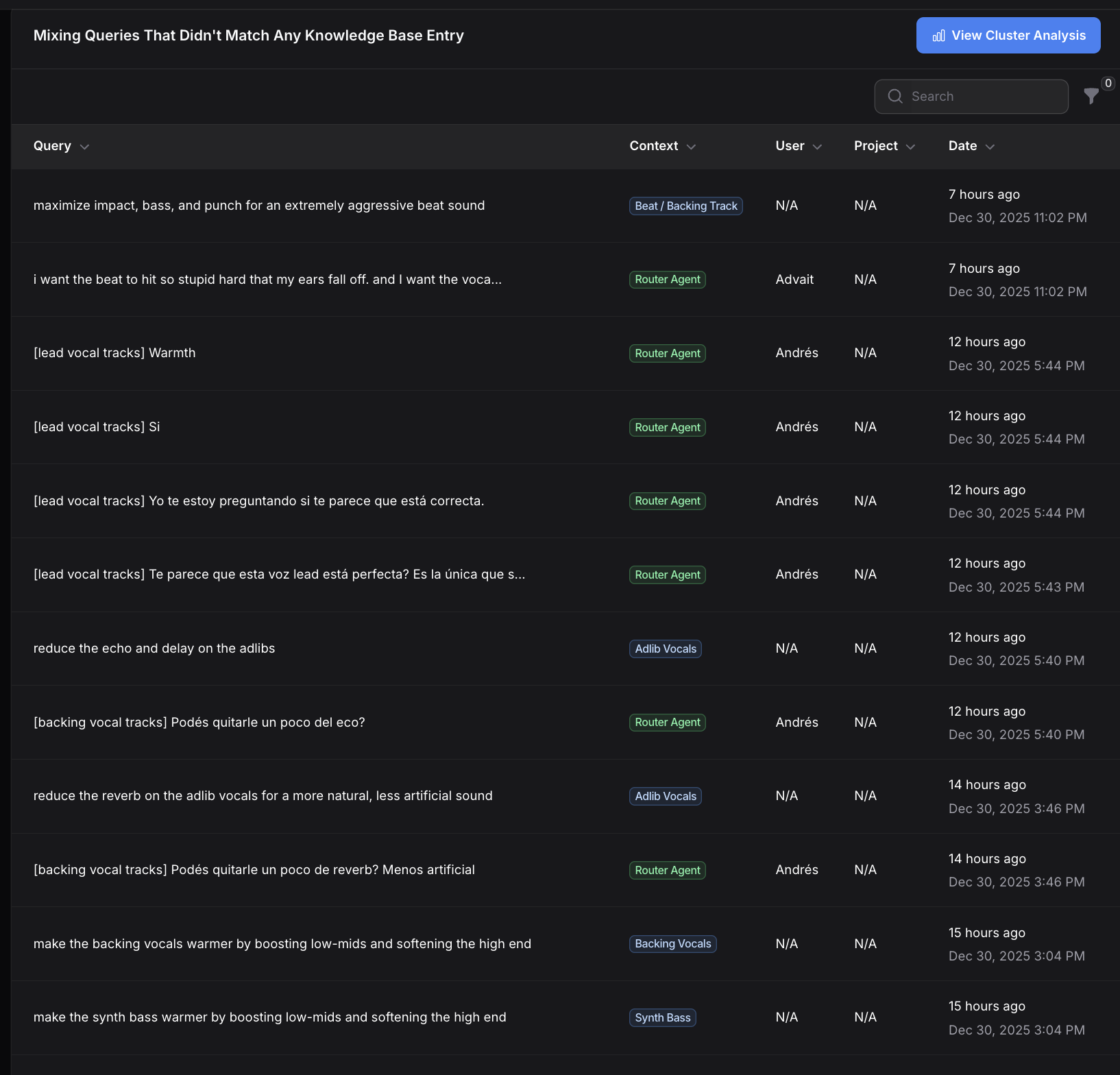
Failure Analysis
Cluster Analysis of Failed Queries

Iterative Logic: Analyzing failed queries (e.g., "maximize impact") to patch the knowledge base and improve match rates.

03. Growth Mechanics

Solving the "Hidden" Bottlenecks.

Good product design drives retention, but technical blockers kill acquisition. My role involved auditing our entire funnel to find where demand was leaking.

The India Payment Paradox

I noticed a massive anomaly in our analytics: India was our #2 traffic source, but had near-zero conversions.

The Discovery: It wasn't a pricing issue. It was regulatory. The RBI's e-mandate on recurring subscriptions was blocking Stripe payments.

The Fix: I pivoted our stack to use Paddle, enabling local UPI payments. This seemingly "boring" backend change unlocked 80% of our serviceable market in Asia.

Transaction Success Rate (Pre vs Post UPI)

B2B Strategy: White Labeling

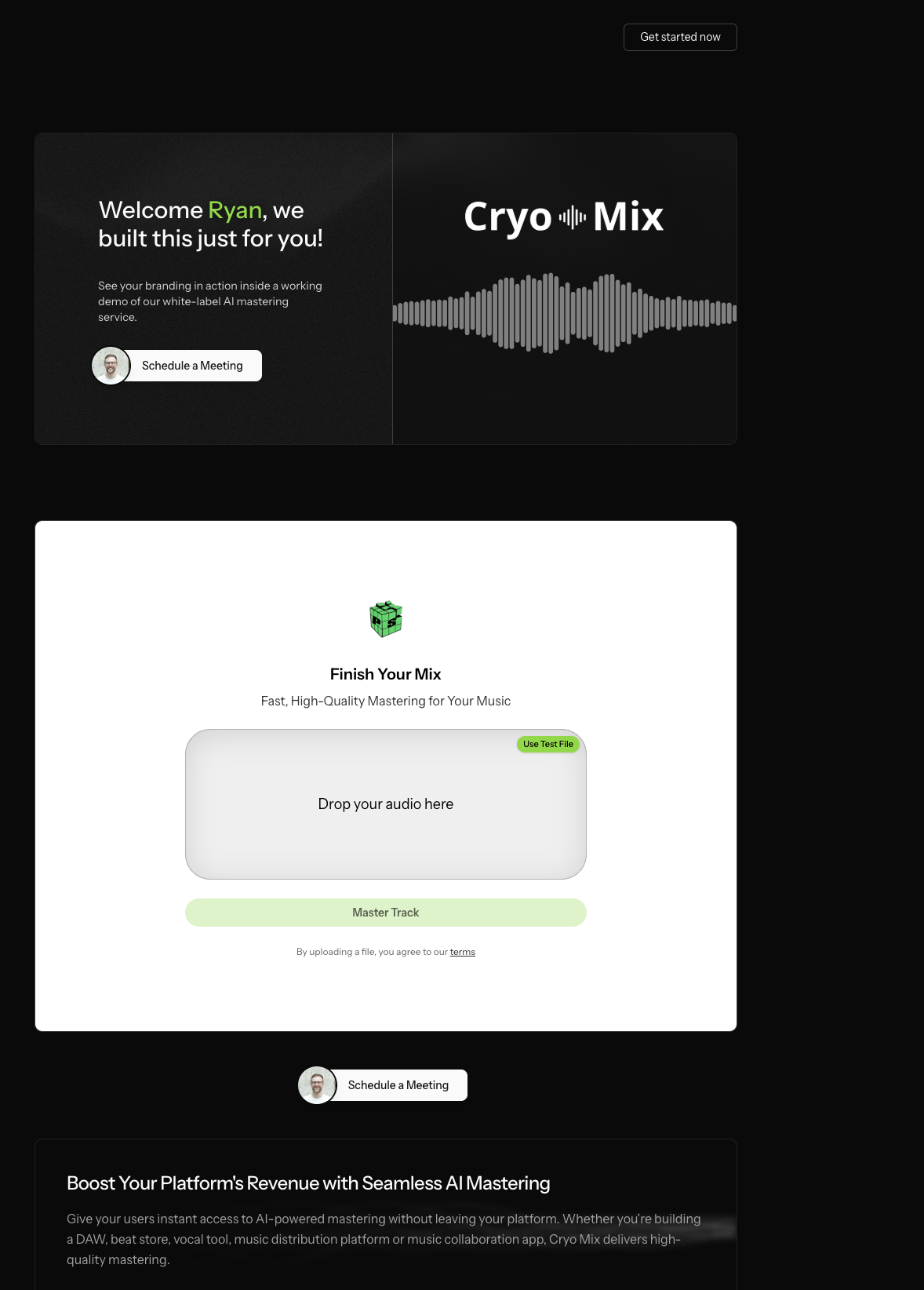
We realized we were competing with distributors who wanted to offer AI mastering themselves. I led the initiative to package our engine as an API product, allowing partners to "white label" our tech.

B2B White Label Dashboard

Closing the Feedback Loop

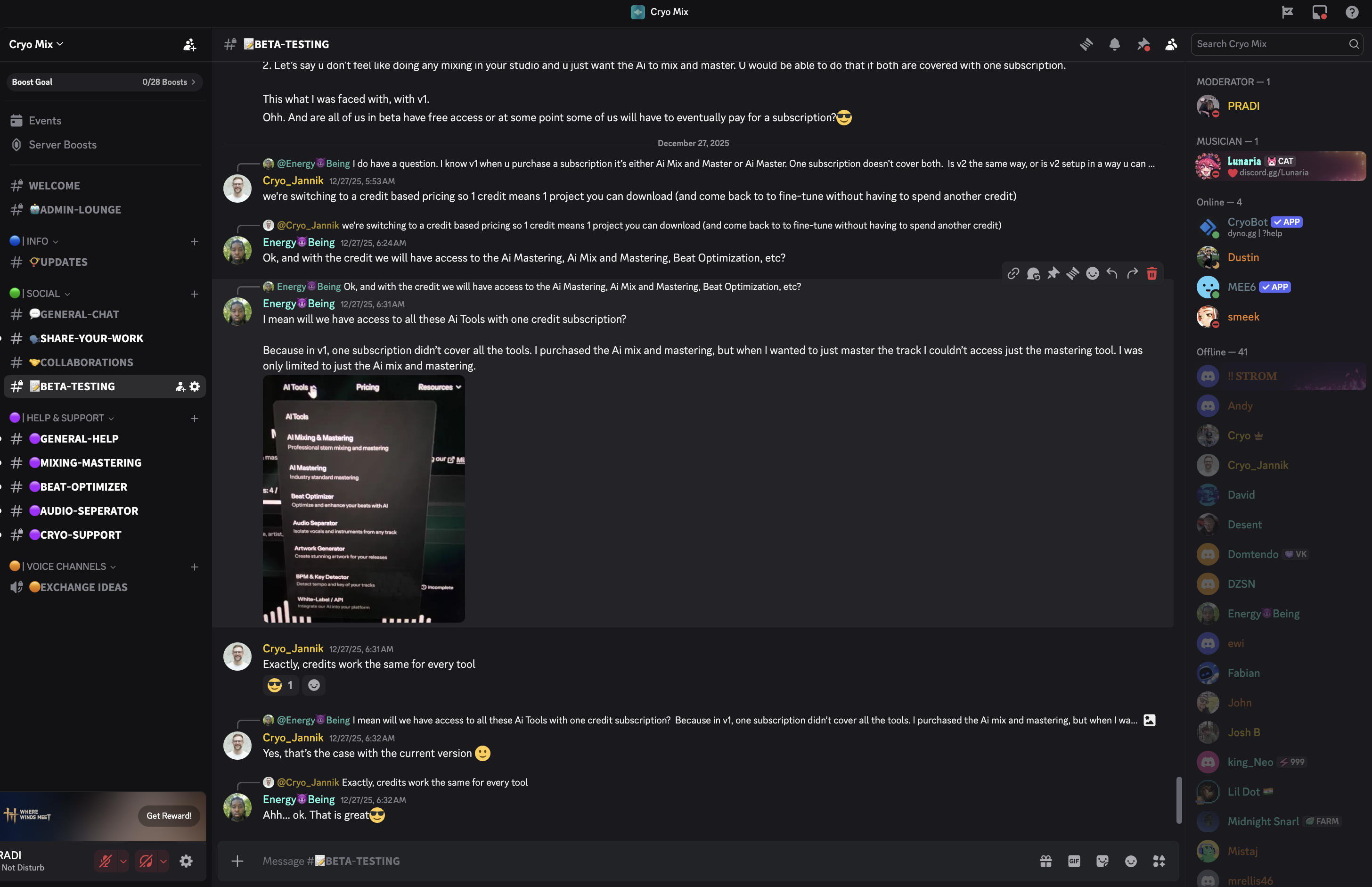
To prevent future misalignment, I established a private Discord beta group. This created a continuous feedback loop, ensuring features like "Advanced Settings" were validated by power users before hitting the roadmap.

Discord Beta Community